 Delta Arc
After IMTS 2026: What New Machines Signal for the Used Market
The show floor reveals where capability is moving. Resale value will be decided by which configurations buyers can actually support, tool, install, and keep productive.
Published · Updated · Market & data intelligence · Educational, not advice.
Published by Delta Arc · Methodology · Corrections
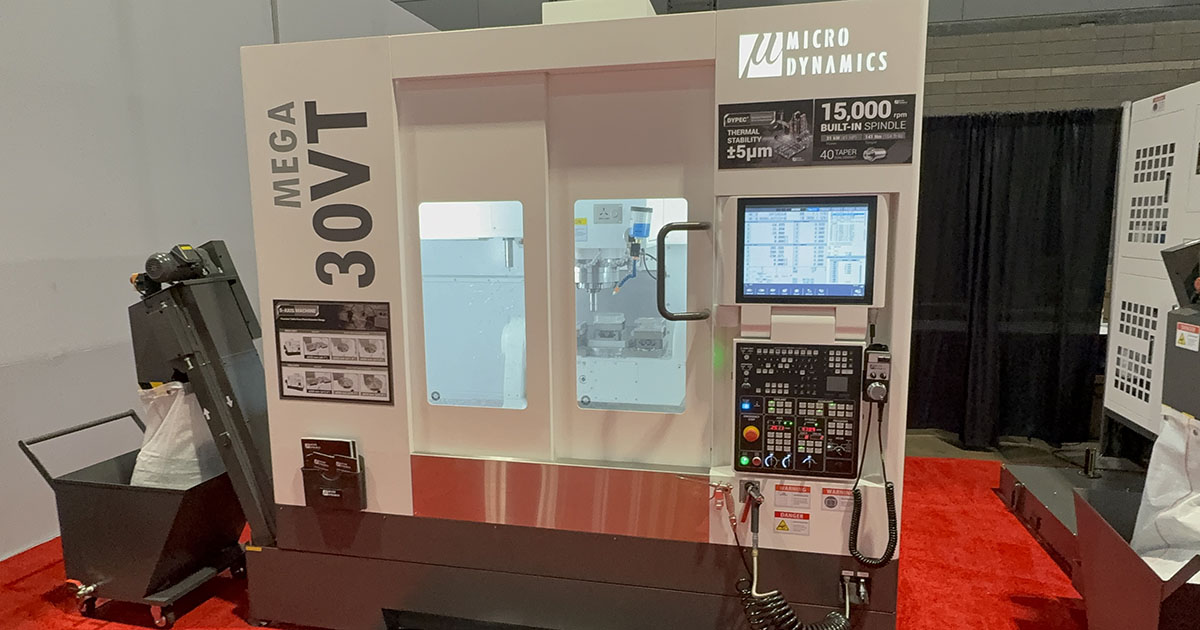
IMTS shows where machine capability is moving, but a launch is not a resale price. Future used value forms around the exact control and option package, tooling and automation, serviceability, delivery timing, and the number of buyers whose work truly fits the platform. Three machines documented at IMTS 2026 show how to read those signals without guessing at price.
The show floor is built to make capability visible. New controls glow, doors open, spindles run, and every machine is presented in the configuration that makes its strongest case. That is valuable information—but it is not yet a used-market valuation.
A new machine enters the secondary market later, after a specific buyer chooses the control, spindle, software, workholding, automation, and accessories. It then accumulates hours, maintenance history, process knowledge, and a local support story. The model badge starts the comparison. The installed configuration and the buyer pool finish it.
That is the useful post-show read. The original Machine Blue Book IMTS 2026 field coverage documents what was visible in Chicago, while its short IMTS machines-in-motion reel provides a quick visual pass. The market question begins after that: which capabilities will remain valuable when today's show machine becomes tomorrow's used machine?
A launch is a direction signal, not a price comp
New equipment can change the used CNC market before many examples reach dealer inventory. It can reset buyer expectations for cycle consolidation, operator access, connectivity, work envelope, automation readiness, or multi-side machining. It can also expose the gap between a machine that photographs well and one a shop can support profitably.
Read a launch through five filters:
- Production fit. What recurring part or process problem does the machine solve?
- Exact configuration. Which capability is standard, which is optional, and which depends on the control or software license?
- Ownership ecosystem. Are service, parts, programming knowledge, tooling, and applications support available where the machine will run?
- Delivery advantage. Can the new machine arrive when capacity is needed, or does an available used substitute carry a time premium?
- Buyer depth. How many shops can use the machine's strengths without paying for capability they do not need?
Those filters explain why two machines with similar headline specifications can age differently in the used market. One becomes a liquid production asset. The other becomes a narrow-fit machine waiting for the exact buyer.
Three IMTS machines, three different market signals
Micro Dynamics MEGA 30VT: verify the axis package
The Micro Dynamics MEGA 30VT reference describes a compact trunnion vertical machining center configured for multi-side access. Manufacturer-published material identifies the platform as 4+1-axis standard, with simultaneous 5-axis capability available as an option. That distinction is the market signal.
Future buyers will not be valuing the words “5-axis” in isolation. They will be checking the control license, rotary configuration, face plate, workholding, probing, spindle package, tool capacity, collision history, and whether simultaneous motion is actually enabled on that serial-specific machine. A model name can place the machine in a category; it cannot prove an option.
The MEGA 30VT and TERA 50V machine-demo video shows the equipment in motion. The used-market read is that multi-side access can reduce reclamping and process steps when the work fits, while option verification determines whether a particular unit delivers the expected capability.
Micro Dynamics TERA 50V: capacity still creates its own demand
The Micro Dynamics TERA 50V reference documents a different answer: a fixed-table, 3-axis vertical machining center with 1,270 mm of published X travel and a 1,500 kg published maximum table load. It is not the TERA 50VT trunnion model and not the 50-taper TERA 50V/50. The suffix matters.
That machine is a reminder that the market does not move in one direction toward more axes. A shop running large molds, plates, or structural work may value envelope, table load, spindle package, and straightforward setup more than rotary access. A buyer should still verify the exact taper, control, tool magazine, probing, coolant and chip equipment, geometry, and installed options.
The broader category lesson matches The Gauge analysis of HMC versus VMC used-market value drivers: format sets the starting point, but throughput fit and condition decide whether the premium earns its keep. A large VMC that stays busy can be more valuable to its owner than a more complex platform waiting for work.
ARIX TMS42CL: classify the architecture correctly
The ARIX TMS42CL reference identifies the machine using the manufacturer's terminology: a turning-milling CNC lathe with a synchronous internal-turning tailstock. The published sheet does not list a subspindle. It should not be described as a Swiss-type lathe or treated as a twin-spindle platform.
That accuracy matters because buyers pay for process architecture, not a loose category label. The TMS42CL's separate internal-turning unit and live-tool arrangement may be relevant where a representative part can benefit from coordinated internal and external work. The real test is a timed process using the intended stock, holders, tooling, workholding, and finished-part handling—not an inference from axis count.
The ARIX TMS42CL machine and tooling video provides visual context for the enclosure, control, work area, and tooling layout. For comparison, The Gauge guide to used Swiss lathe and bar-fed market value explains the guide-bushing architecture and specialized buyer pool that define the Swiss category. The two discussions belong beside each other as a contrast, not as a claim that the ARIX is a Swiss machine.
What actually carries into future used CNC value
1. The build record
Used buyers inherit one machine, not a brochure. The serial number, original option sheet, control model, software licenses, spindle interface, electrical requirements, installed automation, parameter backup, and manuals define what transfers. Any feature that changes process capability or replacement cost should be documented before the machine is marketed.
This is especially important when a model family spans materially different suffixes or when simultaneous motion is optional. A clean listing that states exactly what is installed attracts qualified buyers and reduces the discount they apply for uncertainty.
2. Control generation and support
The control ages on a different clock from the castings. Parts availability, service coverage, postprocessor support, networking, memory, operator familiarity, and licensed functions can preserve or erase the advantage of good mechanical condition. The Gauge's guide to CNC control generation and future machine value lays out the current, supported, and orphaned phases that buyers should investigate.
For a machine seen at a show, a current control is part of the appeal. For that machine years later, the question becomes whether the exact control and drive package remain repairable, understood, and economical to own.
3. Tooling, workholding, and the complete cell
A bare machine and a production-ready cell are not equivalent. Rotary workholding, probes, holders, driven tools, collets, bar feeder, high-pressure coolant, chip handling, mist collection, and automation can represent substantial replacement cost and months of integration work. Their value is not automatically dollar-for-dollar, but their absence can make a seemingly cheap machine slow and expensive to commission.
The strongest resale package shows what is included, what is excluded, what runs under power, and what still needs integration. Buyers should price the route to the first good part, not just the rigging date.
4. Delivery time and available substitutes
New-machine availability can move used prices even when the used machine itself has not changed. When comparable new equipment is delayed, an inspected used machine that can ship and run quickly may carry a time premium. When new lead times compress, that premium can fade. The mechanism is detailed in why new-machine lead times move the used CNC market.
Do not infer today's delivery schedule from a trade-show appearance. Get a current, written quote for the required configuration and compare its real delivery and commissioning window with available used alternatives.
5. Demand density
Capability creates value only where enough buyers need it. A standard VMC may have a broad pool and many substitutes. A specialized multi-axis or turning configuration may have fewer buyers, yet command a strong price when it matches an urgent part family. That is why “more capable” and “more liquid” are not synonyms.
The practical question is not whether a machine is impressive. It is who can put it to work without rebuilding the process around it, and how many credible alternatives those buyers have.
How buyers and sellers should use the IMTS signal
For a buyer, the show identifies capabilities worth researching. Before applying that enthusiasm to a used unit:
- Match the model, suffix, serial number, control, and build sheet.
- Separate standard features from options and software licenses.
- Inspect geometry, motion, spindle condition, rotary alignment, and maintenance evidence as applicable.
- Inventory every holder, probe, workholding item, feeder, conveyor, collector, and automation interface included in the deal.
- Confirm local service, parts, programming, training, and applications support.
- Run a representative part or an agreed test that exercises the capability you are buying.
- Compare the complete installed timeline and cost against both new and used alternatives.
For a seller, the same list becomes the marketing package. State the architecture correctly. Photograph the nameplate and installed options. Preserve parameter backups and service records. Show the machine under power. Make the tooling and peripheral inventory explicit. Specific evidence expands confidence; vague capability claims shrink it.
What the show floor cannot tell you
Original photographs and video can document a displayed machine, visible layout, control location, work area, and show-floor context. They do not establish production accuracy, maintenance history, hidden options, standard equipment, delivery schedule, warranty, or future resale price for that machine—or the condition of another unit with the same badge.
Manufacturer specifications describe a model family and can change by market, control package, option set, and build revision. Used-machine research should therefore move from field coverage, to the exact model reference, to serial-specific records and an inspection. That sequence preserves what the show can teach without turning presentation into proof.
The bottom line after IMTS 2026
New-machine capability wins attention. Future used value is built at the intersection of production fit, exact configuration, control support, tooling, serviceability, delivery time, condition, and buyer demand.
The MEGA 30VT points to the value of verified multi-axis configuration. The TERA 50V shows that work envelope and table capacity can matter more than axis count. The ARIX TMS42CL shows why turning architecture must be named precisely before it can be priced intelligently. None supplies a market value by itself. Together, they show how to ask better questions.
Start with the full IMTS 2026 recap and original field coverage, then move into the exact model pages and machine-level evidence. The show tells you where capability is going. The used market decides what that capability is worth when a real buyer, a real machine, and a real deadline meet.
Evidence note: Linked field coverage documents visible show-floor context; linked reference pages summarize manufacturer-published model information. Neither replaces serial-specific records, a current quote, or an independent inspection. Delta Arc and The Machine Blue Book are not presented as endorsed by, sponsored by, or affiliated with IMTS, Micro Dynamics, or ARIX.
Use The Machine Blue Book to research machine types, models, configurations, original IMTS 2026 field coverage, and used-market context before requesting a value.